Alaska license plate options run from the standard gold plate to cause plates, military plates, university plates and collector plates. The list is long enough that a new owner can spend an evening reading through it. Each design uses the same six-character passenger format, so the choice comes down to color, message and vehicle class rather than layout. Some groups ask for proof before issue; others are open to any registered owner. One plate goes on the rear bumper under the single-plate rule in force since August 2022.
Alaska license plate options are grouped by purpose on the state forms, which helps a buyer narrow the field fast. Standard, specialty, military, university, disability, historic and commercial groups each follow their own rules. Some plates need proof of service or a medical signature, others need nothing beyond the normal registration paperwork. Each section below sticks to the practical details. This page walks through every group and describes how to pick one that fits the vehicle, the garage wall, the budget and the daily routine.
How to Choose a Design
Choosing a design starts with the vehicle, not the artwork. See Alaska License Plates for more. The class, the weight and the paperwork each narrow the list before color enters the picture. A buyer who follows the order below avoids a second trip to the counter. The stages work for a first-time plate and for a swap on a vehicle already on the road.
Official source: https://dmv.alaska.gov/vehicle-services/license-plates/
Start With the Vehicle Class
A passenger car, a pickup under the commercial weight line, a trailer and a farm truck each draw from a different list. Confirm the class on the registration before browsing designs. A plate ordered for the wrong class gets rejected at the counter, and the buyer loses the trip. The registration card lists the class in plain text.
Check the Transfer Rules
Standard plates stay with the state when a vehicle sells. Specialty and personalized plates can move to another vehicle under the state transfer process, and some categories are handled differently. A buyer who plans to keep a plate should ask about transfer before the sale closes. Form 814 releases a plate from the old record.
Apply With Form 803
Form 803 is the plate application for every design on this page. The form asks for the vehicle, the design and the owner details. File it with the registration paperwork at a DMV office or by mail. Keep a copy, since the plate arrives separately from the registration in most cases.
- Confirm the vehicle class on the registration card
- Ask about transfer before a sale closes
- Name the exact design on Form 803
- Keep a copy of every form filed
Order Online or by Mail
The state takes plate applications by mail and at the counter, and some stages run through the online portal. A mailed form needs the registration documents attached and the owner’s signature in place. The counter route lets the clerk check the form on the spot and catch a wrong design name. Either path ends with the plate in the mail and the registration in hand.
Standard Plate Designs
Standard plate designs form the base of the Alaska lineup. They renew with the normal registration and suit any passenger car, pickup or SUV. Three designs sit in this group: Standard Gold, Blue N Gold and Grizzly Bear. Every one of them uses the ABC 123 serial pattern issued since January 2010, and every one of them leaves the front bumper bare.
The Standard Gold Plate
The Standard Gold plate is the default issue for most passenger vehicles. A gold band runs across the top with the state name, and the serial sits in the middle in blue. Owners who never ask for anything else receive this design at the counter. The look is plain on purpose: it reads at a distance and gives a clear serial under any light. Fleet buyers and rental companies tend to stay with it for that reason.
Blue N Gold
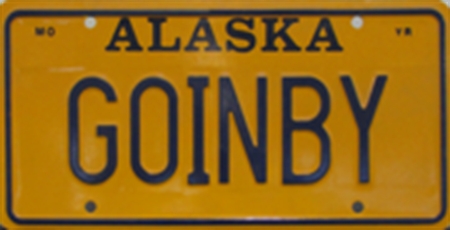
Blue N Gold flips the color balance, with a deep blue field and gold lettering. It sits beside the gold plate in the standard group and keeps the same serial layout. A swap between the two changes the look without touching the vehicle record. Owners order it on Form 803 at the counter or by mail, and the plate arrives with the registration paperwork.
Grizzly Bear
The Grizzly Bear design puts a standing bear on a white field with blue text. It returned to the standard lineup in 2015 and holds the same standing as the other two standard plates. Many owners pick it for the artwork alone. A separate section of this site covers the 1976 original and the 2015 return in detail, including the serial ranges that collectors watch.
- Standard Gold for a classic look that hides road grime
- Blue N Gold when the car color suits a dark field
- Grizzly Bear for the animal artwork on a light background
Personalized Combinations on a Standard Plate
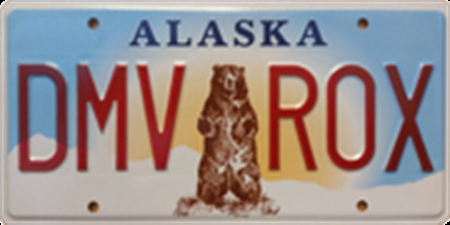
Any of the three standard designs can take a personalized combination instead of a random serial. The limit is six characters on most passenger designs, with letters and numbers only and no symbols. The state reviews each request under the decency rule in 2 AAC 92.120. A rejected combination still leaves the owner free to file a second choice on a fresh form.
Specialty and Support-Based Plates
Specialty and support-based plates carry a message beyond the state name. Some raise money for a program, others show a stance, and a few mark a profession or a hobby. The group holds more designs than any other part of the lineup. Each design keeps its own rules on who may order it and what proof the counter needs.
Support-Based Plates
Support-based plates carry a slogan or symbol tied to a cause. Support Our Troops, Choose Life, Pro-Family, Pro-Choice and NRA plates sit in this group. Each one carries its own renewal terms, so a buyer should read the specialty table before committing. A design that looks right on the first visit can feel different after five renewals, and the table makes that trade visible.
Health and Cause Plates
Health and cause plates cover Breast Cancer, Children’s Trust and Blood Bank designs. Each one ties to a named fund, and each one handles issue and renewal on its own schedule. The specialty page sets the details out in one table. Buyers who care where the money goes should read that table before they file Form 803, since the fund behind each design differs.
Service and Hobby Plates
Service and hobby plates mark a job or a pastime. Firefighter/EMS, amateur radio, Iditarod and fraternal plates fall here. Most are ordered once and kept through renewals. Amateur radio operators often hold the same plate for years, and the design stays with the vehicle through each renewal cycle.
- Support Our Troops, Choose Life, Pro-Family, Pro-Choice, NRA
- Breast Cancer, Children’s Trust, Blood Bank
- Firefighter/EMS, amateur radio, Iditarod, fraternal orders
- National Guard, unit designator, Laos veteran
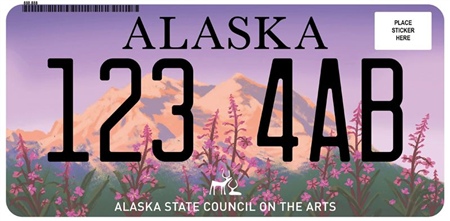
The Fireweed Plate
The Fireweed plate carries the state flower on a light field and uses the same paperwork as the standard group. Owners often pair it with a personalized combination, since the six-character limit leaves room for a name or a short word. The design has stayed in the lineup for years, which makes it one of the familiar sights on an Alaska road. The flower artwork holds up well against road salt, and the light background keeps the serial readable in winter. Replacement blanks exist, so a damaged plate can be swapped without losing the design.
Military and Veteran Options
Military and veteran options honor service in several ways. Some plates name a branch, others name a unit, and a few mark a specific award or group. Most ask for proof of service at the counter. The state treats the highest honors differently from the rest, and a dedicated military page covers the paperwork in full.
Branch Plates
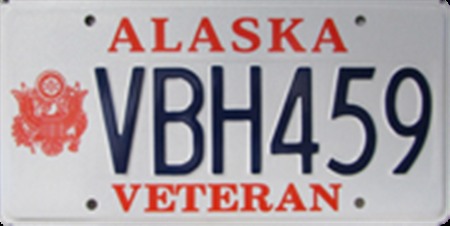
Branch plates carry the seal and colors of a service branch. The Army, Navy, Air Force, Marine Corps and Coast Guard each have a design. A veteran or active member orders one with the same Form 803 used for any other plate, plus a copy of the discharge or service record. The counter checks the record against the branch named on the form.
National Guard and Unit Designators
National Guard plates mark current or former Guard service. Unit designator plates go further and print a specific unit on the face. Both use the standard six-character serial and follow the same ordering path. A unit designator application needs the exact unit name, so check the wording on the form before filing.
POW, Purple Heart and Gold Star
POW, Purple Heart, Pearl Harbor Survivor and Gold Star plates carry the strongest recognition in the lineup. The state issues them as recognition plates rather than as a purchased design. Paperwork still applies: the applicant shows proof of the award or the family status the plate marks. These designs stay with the owner through renewals and transfers.
University Plates
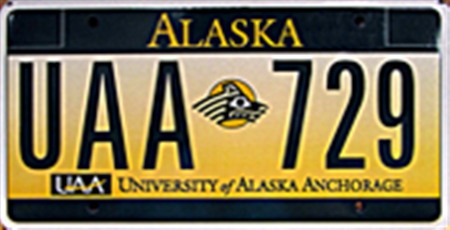
University plates carry a campus name and mark. See Alaska specialty plates for more. They sit in their own group on the state forms, apart from cause and military designs. The plate follows the same six-character pattern as the rest of the passenger lineup. The design suits alumni, staff and fans who want the campus name on the car.
Campus Designs
Each campus design pairs a school name with the colors and mark of that school. The state prints the campus name in full, and the serial sits beside it. Designs change when a school updates its mark, so an older plate can look different from a current one. Buyers who want a matching pair for two vehicles should order both at the same time. A plate frame can hide part of the campus name, so keep the frame narrow.
Ordering a University Plate
A university plate starts with Form 803. The applicant names the campus design on the form and files it with the registration paperwork. The plate arrives by mail in most cases, and the counter gives a timeline at filing. Anyone renewing a vehicle can move to a university design at the same time as the renewal.
A Campus Plate Through a Sale
A university plate moves with the owner, not the car, under the specialty transfer rules. The seller files Form 814 to release the plate before the buyer registers the vehicle. The buyer then registers with a fresh plate of their own choosing. Skipping the release leaves the plate attached to a record the seller no longer owns, which can stall the buyer’s registration.
Disability Plates
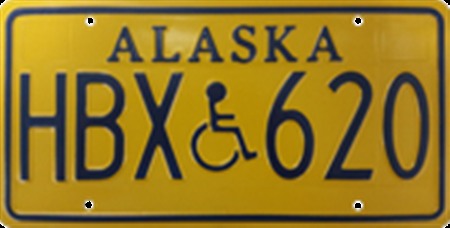
Disability plates serve drivers and passengers with a qualifying condition. The state issues them in place of the standard plate, and the design carries the international symbol. A plate and a hanging placard both exist, and the choice between them comes down to how the vehicle is used. Form 861 drives the whole process.
Plate or Placard
A disability plate stays with the vehicle, and a placard moves with the person. Households with one adapted vehicle often pick the plate. Households where several people drive different cars often pick the placard, since it can move from one dashboard to another. Some owners keep both and use the placard in a rental car.
- Plate for a single vehicle used by one driver
- Placard for a household with several cars
- Both when a rental or loaner car enters the mix
Form 861 and Certification
Form 861 records the medical certification behind the plate. A licensed professional signs the form and states the condition that qualifies. The state reviews the form before it issues the plate, and a renewal may ask for a fresh signature. Applicants should keep a copy of the signed form with the vehicle paperwork.
Renewing a Disability Plate
A disability plate renews with the registration, and the state may ask for a fresh Form 861 at that point. The renewal notice lists what the office wants, so read it before the deadline. Owners who move to a new vehicle should file the plate paperwork along with the registration change. A placard renewal follows its own schedule, which the state prints on the hang tag.
Historic and Collector Options
Historic and collector options serve older vehicles kept for shows and weekend drives. Two groups exist: historic vehicle plates and custom collector plates. Each one targets a different kind of owner and a different kind of car. Both reward patience, since the state checks the vehicle before it issues either design.
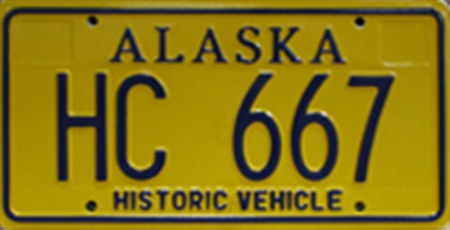
Historic Vehicle Plates
Historic plates suit vehicles at least 30 years old that are kept as collector pieces. The age rule sets the group apart from every other design in the lineup. Owners file Form 803 with the registration paperwork and show the vehicle meets the age test. Most historic cars see limited road time, and the plate reflects that role.
Custom Collector Plates
Custom collector plates cover older vehicles that do not fit the historic group. The state reviews each application and checks that the vehicle qualifies for collector status. Owners often pair the plate with period-correct details on the car. Collectors who own several old vehicles sometimes spread them across both groups.
Commercial, Trailer and Farm Plates
Commercial, trailer and farm plates follow vehicle weight and use rather than owner preference. See Alaska bear plate for more. A pickup used for hire, a box truck and a flatbed trailer each land in a different group. The state sets the class at registration, and the plate follows the class. Weight drives most of the decisions in this part of the lineup.
Commercial Plates
Commercial plates go on vehicles used to move goods or earn money on the road. Alaska asks for a front plate on commercial vehicles over 10,001 pounds, which makes this the one group with two plates. The rear plate carries the class and the serial. Owners who move a vehicle between personal and business use should tell the counter, since the class may change.
Trailer Plates
Trailer plates follow the trailer, not the tow vehicle. A utility trailer, a boat trailer and a camper each get their own registration and plate. The plate mounts at the rear of the trailer, where the law expects it. A trailer sold without a plate leaves the buyer to register it from scratch. A trailer bought out of state needs the same stage before it can pull onto a public road.
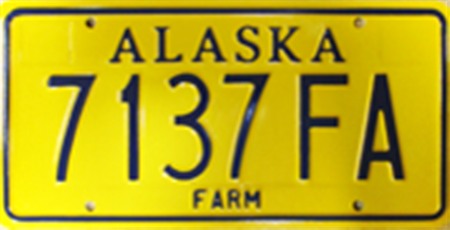
Farm Plates
Farm plates serve vehicles used on agricultural land. The state limits the group to farm work, so a truck that hauls for hire does not qualify. Owners apply through the state farm vehicle process and describe the vehicle’s role. A farm plate on a vehicle used off the farm can draw a citation.
Moving a Vehicle Between Classes
A vehicle can change class when its use changes. A pickup that starts hauling for hire becomes a commercial vehicle, and the plate follows the new class. Owners should report the change at registration rather than wait for renewal. A commercial plate on a vehicle used only for errands adds paperwork the owner does not need, and a farm plate on a working truck invites a fine.
- Commercial: goods or hire, front plate over 10,001 pounds
- Trailer: rear-mounted plate, separate registration
- Farm: agricultural use only, no hire work
Frequently Asked Questions
These questions come up at the counter and in messages from owners. Each answer covers the short version, and the sections above hold the detail. A fast read here often saves a second visit to the DMV.
Can one vehicle carry two plate designs at once?
No. Alaska requires one rear plate on a passenger vehicle, and that plate carries a single design. Two designs would mean two vehicles, each with its own registration. A collector with several cars can spread different designs across the fleet. The single-plate rule has applied since August 2022, and the front of a passenger car stays bare.
Which designs need proof at the counter?
Military plates need a service record or discharge paper. Disability plates need Form 861 signed by a medical professional. Historic plates need the vehicle to meet the 30-year age test. Farm plates need the vehicle’s agricultural role described on the application. Standard, university and most cause designs need only the normal registration paperwork with Form 803.
Can I move a specialty plate to another vehicle?
Yes, through the state transfer process. Specialty and personalized plates can move from one vehicle to another, and Form 814 releases the plate from the old record. Standard plates do not transfer, so a standard design stays behind when the car sells. Some categories are handled differently, and the counter confirms the category before filing.
When does a personalized combination become available?
A combination becomes available after it has been off a vehicle or expired for more than 60 days. Until then, the state keeps it attached to the last record. Six characters is the limit on most passenger designs, with letters and numbers only and no symbols. The decency rule in 2 AAC 92.120 applies to every request.
What should I do if a plate arrives damaged?
Take the plate to a DMV office and ask for a replacement. Bring the registration and the damaged plate, since the state collects the old one. A bent or peeling plate can fail a roadside check, so do not wait for renewal. The counter orders a fresh copy of the same design.